MMA Gloves Size Chart
Finding the right glove size is essential for comfort, protection, and proper striking mechanics. MMA gloves must fit securely while still allowing enough finger mobility for grappling, clinching, and submission transitions. A glove that is too tight can restrict movement and blood flow, while a glove that is too loose may reduce control and increase the risk of injury.
Use this guide to measure your hand correctly and select the right size for training, sparring, or competition.
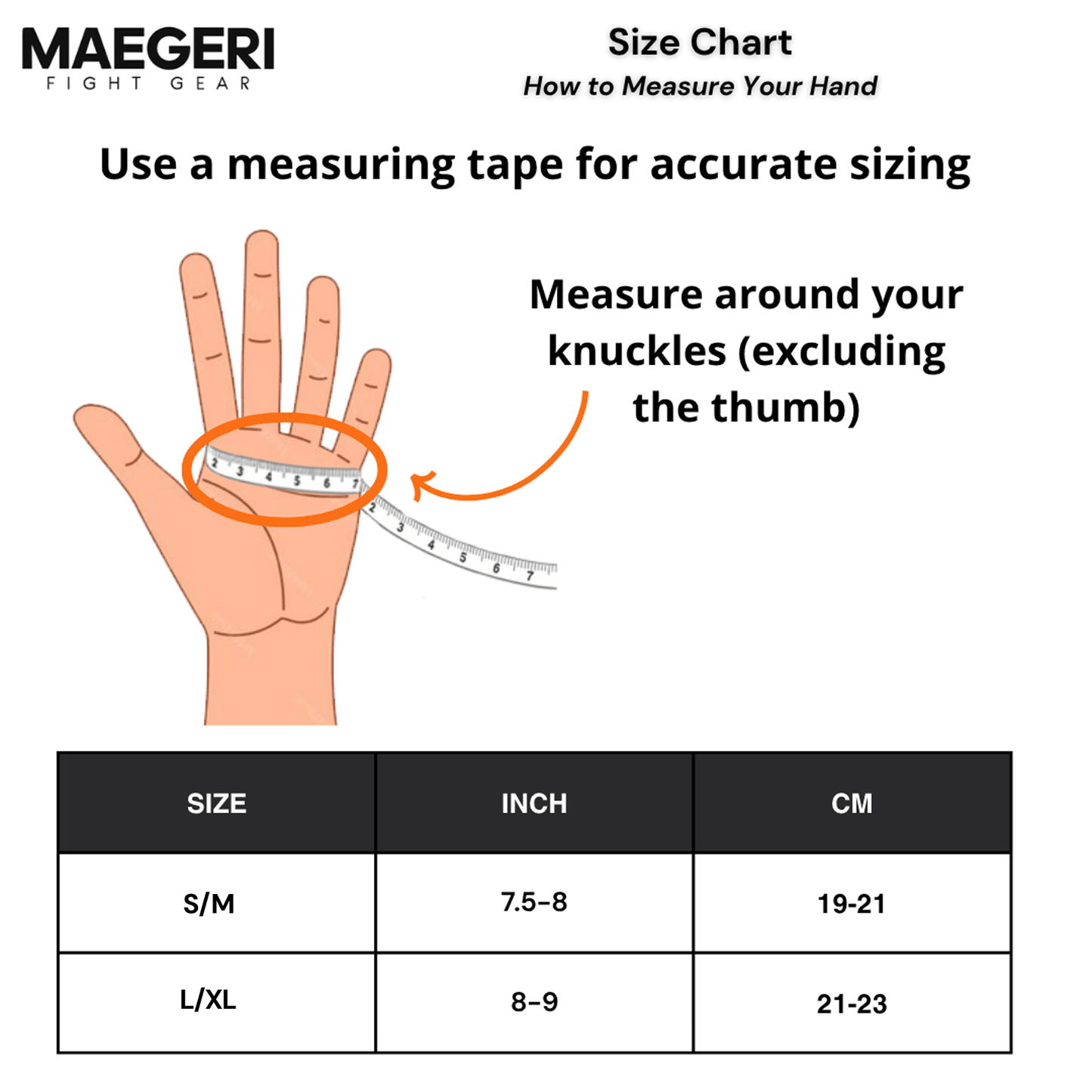
How to Measure Your Hand
To determine the correct glove size, measure the circumference of your dominant hand around the knuckles, excluding the thumb. This measurement determines the appropriate glove size and padding weight.
Follow these steps:
- Open your hand fully and relax your fingers.
- Wrap a measuring tape around the widest part of your knuckles.
- Make sure the tape is snug but not overly tight.
- Record the measurement in centimeters.
If you fall between two sizes, choose the larger size for sparring comfort or the smaller size for a tighter, competition-style fit.
If you are still unsure which model and padding level fits your training style, follow the step-by-step advice in How to Choose MMA Gloves.
MMA Gloves Size Chart
Below is a general sizing chart used by most MMA glove manufacturers. Exact fit may vary slightly by brand, but these measurements provide a reliable guideline.
| Hand Circumference (cm) | Size | Typical Weight (oz) | Fit Notes |
|---|---|---|---|
| 16–18 cm | S | 4–6 oz | Best for youth, small hands, or very tight fit preference |
| 18–21 cm | M | 6–7 oz | The most common adult size; balanced mobility and protection |
| 21–23 cm | L | 7 oz | Ideal for larger hands or athletes needing extra padding |
| 23–25 cm | XL | 7 oz | Best for very large hands or wide knuckle structure |
Different glove categories can fit and feel slightly different, so it is useful to compare the Types of MMA Gloves when deciding which size to go for.
How Should MMA Gloves Fit?
The ideal fit provides a snug, secure feel without restricting movement. Your fingers should comfortably slide through the loops, and the padding should align naturally with your knuckles.
Signs of a good fit:
- Gloves feel snug but not overly tight
- Finger loops do not pinch or rub
- You can make a full fist without resistance
- Palm area allows comfortable grappling grip
- Wrist strap locks the glove securely in place
Signs of a bad fit:
- Pain or pressure on the knuckles
- Excessive looseness or shifting during strikes
- Limited finger mobility for grappling
- Palm fabric bunching or folding
- Wrist strap not providing proper support
Sizing Tips for Training vs Competition
Different training scenarios may require slightly different fits or glove weights.
- Sparring: Choose a slightly larger size or gloves with extra padding (6–7 oz)
- Technical drilling: True-to-size gloves work best for mobility
- Competition: A tighter fit is preferred for precision and speed (4 oz gloves)
- Beginners: Slightly more padding helps reduce hand soreness
Why Proper Sizing Matters
Correct sizing ensures better striking alignment, improved grappling performance, and reduced risk of hand, wrist, or finger injuries. A properly fitted glove enhances both comfort and longevity, allowing you to train more effectively and safely.
If you want a broader context on how MMA gloves are used and why sizing is so important, start with our Introduction to MMA Gloves.
Take the time to measure your hand accurately, and always test both fist formation and open-hand mobility before committing to a size.
Related Guides

Maegeri
MMA Sparring Glove - Athenix 1
Share