How to Choose MMA Gloves
Choosing the right MMA gloves is essential for safe training, effective striking, and smooth grappling transitions. The ideal glove depends on your experience level, training focus, and how much protection you need for yourself and your training partners.
This guide walks you through the key factors to consider when selecting MMA gloves, so you can match the glove type, size, and padding to your goals.
1. Define Your Training Goals
The first step in choosing MMA gloves is understanding how you plan to use them. Not all gloves are designed for the same purpose.
- Light technical training: Focus on mobility and comfort.
- Striking-focused sessions: Prioritize knuckle and wrist protection.
- Sparring: Choose gloves with more padding to protect both you and your partner.
- Competition preparation: Use gloves that match fight conditions (typically 4 oz).
Once your training goal is clear, it becomes easier to pick the right glove type and weight.
2. Choose the Right Glove Type
MMA gloves come in several types, each with its own strengths and ideal use cases.
- Competition gloves (4 oz): Minimal padding, maximum speed and impact. Best for fights and very controlled pad work.
- Sparring gloves (6–7 oz): Extra padding for safe sparring and higher volume striking.
- Training or hybrid gloves (around 5 oz): Balanced option for mixed striking and grappling training.
- Grappling gloves: Thinner padding and maximum finger freedom for submission-focused work.
If you only buy one pair of gloves for all-round MMA training, well-designed hybrid or training gloves are often the best choice.
For a detailed breakdown of glove types, see Types of MMA Gloves.
3. Pick the Correct Glove Weight
Glove weight directly affects impact, safety, and how training feels.
- 4 oz: Fight gloves, very light, minimal padding, high impact.
- 5 oz: Hybrid or training gloves, good for mixed sessions.
- 6–7 oz: Sparring gloves, safest choice for hard training.
In general:
- Use 6–7 oz gloves for sparring and heavier contact.
- Use 5 oz gloves for technical training and all-round MMA work.
- Reserve 4 oz gloves for competition and very specific drills.
For more detail on how weight affects performance and impact, visit MMA Gloves Weight & Impact.
4. Make Sure the Size and Fit Are Correct
Even the best glove will perform poorly if it doesn’t fit properly. A glove that is too small can cause pain and restrict movement, while a glove that is too large may shift on impact and reduce control.
Key fit checks:
- Your hand slides in comfortably without forcing it.
- You can make a tight fist without excessive resistance.
- The padding aligns naturally with your knuckles.
- Finger loops are snug but not cutting into the skin.
- The wrist strap can be tightened securely without discomfort.
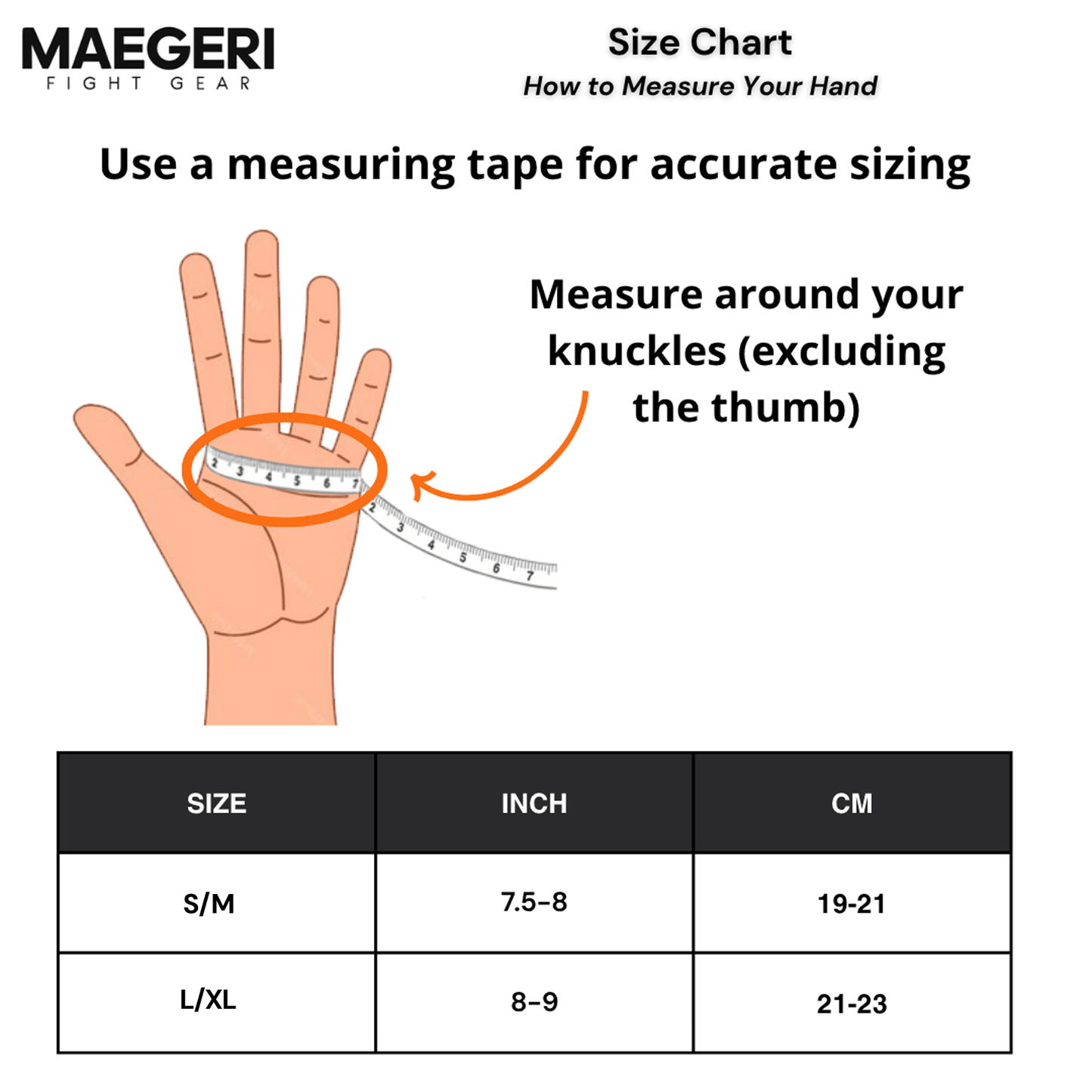
Always measure your hand before choosing a size. Use the MMA Gloves Size Chart to find the correct size based on hand circumference.
5. Consider Wrist Support
Strong wrist support is crucial for safe and powerful striking. Poor wrist alignment can lead to sprains, strains, or long-term joint issues.
Things to look for:
- A secure Velcro strap that stays in place during training.
- A cuff length that supports the wrist without limiting movement.
- A snug wrap that keeps the wrist aligned behind the knuckles.
For heavy striking or sparring, prioritize gloves with a more supportive closure system and always use proper hand wraps underneath.
6. Check Material and Build Quality
Material quality affects glove durability, comfort, and long-term performance.
- PU leather: Good for beginners and recreational training. Affordable and lightweight.
- Genuine leather: More durable, better feel, and a longer lifespan with proper care.
Pay attention to:
- Double or reinforced stitching in high-stress areas.
- Consistent padding density without lumps or soft spots.
- Comfortable inner lining that doesn’t irritate the skin.
7. Match Gloves to Your Experience Level
Different experience levels have different needs when it comes to protection, feedback, and glove responsiveness.
- Beginners: Should prioritize safety and comfort with slightly more padding (6–7 oz).
- Intermediate fighters: Can use hybrid gloves for realistic training while maintaining protection.
- Advanced fighters: Often use multiple gloves: sparring gloves, training gloves, and competition gloves.
As your technique improves, you may add more specialized gloves to your gear bag to match specific training goals.
8. Common Mistakes When Choosing MMA Gloves
- Using 4 oz competition gloves for regular sparring.
- Choosing gloves that are too small “for a tighter feel,” causing circulation or joint issues.
- Training only with light gloves on the heavy bag, leading to hand or wrist injuries.
- Ignoring size charts and guessing based on body weight alone.
Avoid these mistakes by matching glove type, size, and weight to the actual training you do most often.
Final Checklist Before You Buy
- Have you clearly defined your main training goal?
- Did you choose the correct glove type (competition, sparring, training, hybrid, or grappling)?
- Did you confirm the weight (oz) fits the intended use?
- Have you measured your hand and checked the size chart?
- Does the glove offer enough wrist support and feel secure?
- Is the material and stitching quality suitable for your training frequency?
When you are ready to make a final decision based on your training goals, experience and budget, use our MMA Gloves Buying Guide as your last step.
If you can confidently answer “yes” to these questions, you’re far more likely to end up with MMA gloves that support your progress, protect your hands, and enhance your performance over the long term.
Related Guides

Maegeri
MMA Sparring Glove - Athenix 1
Share